Case studies
Thathsara Nanayakkara CEng AEng MIET AMIE(SL) MIEEE
Published: 29/09/2026
Education and qualifications:
MEng Biomedical Engineering, Pukyong National University, South Korea
BSc Eng. (Hons), Electrical and Electronic Engineering, General Sir John Kotelawala Defence University, Sri Lanka
Area/field of enginering:
Electrical and Electronic Engineering, Bio-Medical Engineering
What area or field of engineering do you work in?
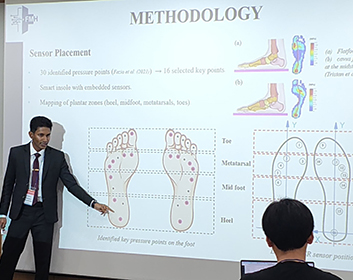
I currently work as a Research Engineer/Scientist in the field of biomedical engineering at Pukyong National University. My work focuses on digital healthcare technologies, including intelligent wearable systems, AI-driven gait analysis, medical imaging, Internet of Medical Things systems, and computer vision to develop innovative solutions for mobility assessment and healthcare monitoring.
Who has had the biggest influence on your journey as an engineer and how?
The biggest influence on my engineering journey has been my father, who is a mathematics teacher. From a young age, he encouraged me to think analytically, solve problems creatively, and value education. His dedication to teaching inspired my passion for engineering, while later academic mentorship further strengthened my research and professional development.
What makes engineering more than just a job for you?
For me, engineering is a way to improve human lives through innovation. Seeing how technology can support healthcare, rehabilitation, and patient dignity gives purpose to my work. Engineering allows me to combine creativity, research, and social responsibility to develop solutions that can positively impact communities across different countries and cultures.
How does your work contribute to a safer, fairer, or more sustainable world?
My engineering research focuses on affordable digital healthcare technologies that improve accessibility to mobility assessment and early disease monitoring. By developing wearable AI-based healthcare systems, I aim to support safer ageing, early detection of movement disorders, and fairer access to healthcare solutions, particularly for communities with limited medical resources or specialist facilities.
What is the biggest career highlight or achievement you’re most proud of?
One of the biggest highlights of my career was receiving honours from the Institution of Engineering and Technology (IET) as the youngest IET-registered Chartered Engineer in Sri Lanka in 2023. This achievement recognised my professional, engineering and research contributions internationally and motivated me to continue advancing engineering innovations that create meaningful impact in society.
Why did you choose to become professionally registered?
I chose professional registration because it represents competence, responsibility, and international engineering standards. Becoming a Chartered Engineer has strengthened my confidence as a researcher and a professional, while demonstrating my commitment to ethical engineering practice, continuous professional development, and delivering engineering solutions that positively impact both industry and society.
What does professional integrity mean to you in engineering?
Professional integrity means applying engineering knowledge responsibly, ethically, and honestly while prioritising public safety and societal benefit. It involves maintaining transparency in research, respecting professional standards, and continuously improving technical competence. Integrity is essential in digital healthcare engineering, where technology directly influences human wellbeing, trust, and quality of life.
How has professional registration benefitted you or your employer?
Professional registration has increased my international professional credibility and strengthened trust in my research and engineering capabilities. It has created opportunities for global collaboration, academic engagement, and professional leadership within organisations such as the IET. It has also helped demonstrate high engineering standards when contributing to multidisciplinary healthcare and technology research projects.
If you could change one perception about engineering, what would it be and why?
Engineering should not be seen as a profession that only builds technology; it is a discipline that shapes the future of humanity. Every bridge, medical device, AI system, and sustainable solution begins with an engineer’s vision. Modern engineering combines creativity, ethics, and innovation to solve global challenges and improve the quality of life for communities worldwide.
How do you hope to inspire the next generation of engineers?
I hope to inspire future engineers by showing that innovation can begin anywhere, regardless of background or country. Through research, mentoring, and knowledge sharing, I want young engineers to see engineering as a powerful tool for creating meaningful societal change, improving healthcare, and building technologies that benefit humanity on a global scale.
Do you identify as disabled, or as a member of a minority or under-represented group? Would you like to comment on what impact or influence you feel this has had upon your career?
Coming from Sri Lanka and pursuing advanced engineering research internationally has allowed me to represent young engineers from developing countries on global platforms. This journey has strengthened my determination to prove that talent, innovation, and professional excellence are not limited by geography, background, or access to resources.