Case studies
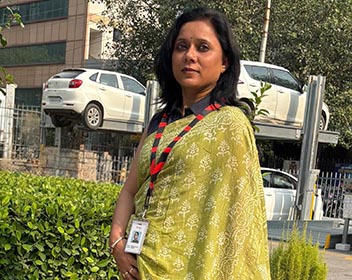
Seema Tanwar EngTech MIET
Published: 30/04/2026
Education and qualifications:
Draughtsman, Civil from Industrial Training Institute, Tilak Nagar ITI, Delhi (India)
Area/field of engineering:
Water and wastewater infrastructure engineering
What area or field of engineering do you work in?
I work in water and wastewater infrastructure engineering, specialising in Building Information Modeling (BIM) for utilities. My focus includes designing foul water, surface water, potable water, and combined flow networks using Civil 3D and AutoCAD, contributing to sustainable urban development across regions like India, New Zealand, and the Middle East.
Who has had the biggest influence on your journey as an engineer—and how?
Supportive mentors and leaders throughout my career have greatly influenced my growth. Their guidance helped me transition from a Computer-Aided Design (CAD) technician to a Senior BIM Technician. Their emphasis on precision, collaboration, and continuous learning shaped my engineering mindset and empowered me to tackle complex infrastructure challenges with confidence.
What makes engineering more than just a job for you?
Engineering is more than a job—it’s a way to create lasting impact. Designing water systems that improve public health and urban sustainability gives my work purpose. Each project is a chance to solve real-world problems, contribute to communities, and leave behind infrastructure that serves generations.
How does your work contribute to a safer, fairer, or more sustainable world?
My work directly supports safer and more sustainable communities by designing efficient water and wastewater systems. These networks ensure clean water access, proper drainage, and environmental protection. Through BIM, I help optimise resources, reduce errors, and support smart infrastructure planning for long-term societal benefit.
What is the biggest career highlight or achievement you’re most proud of?
One of my proudest achievements was leading the BIM coordination for a large Special Economic Zone (SEZ) water infrastructure project in India. I developed detailed civil 3D models, coordinated across disciplines, and delivered construction-ready drawings that met tight deadlines—resulting in successful implementation and recognition from both clients and project managers.
Why did you choose to become professionally registered?
I pursued professional registration to validate my expertise, uphold industry standards, and enhance credibility. It reflects my commitment to continuous improvement and ethical practice. Registration also opens doors to leadership roles and global opportunities, allowing me to contribute more meaningfully to infrastructure development.
What does professional integrity mean to you in engineering?
Professional integrity means delivering accurate, safe, and sustainable engineering solutions while adhering to ethical standards. It involves transparency, accountability, and respect for public welfare. In BIM, it also means ensuring data accuracy, collaboration, and compliance with design protocols to support reliable infrastructure outcomes.
How has professional registration benefitted you or your employer?
Professional registration has strengthened my role within the organisation by enhancing trust and responsibility. It assures clients and stakeholders of my technical competence and ethical standards. For my employer, it adds value by demonstrating a commitment to quality and professionalism in project delivery.
If you could change one perception about engineering, what would it be and why?
I would change the perception that engineering is purely technical. It’s a creative and collaborative field that solves human challenges. Engineering blends innovation, sustainability, and social impact. By highlighting its role in shaping communities, we can attract more diverse talent and inspire broader appreciation.
How do you hope to inspire the next generation of engineers?
I aim to inspire future engineers by mentoring young professionals, sharing real-world project experiences, and promoting BIM as a powerful tool for sustainable design. Encouraging curiosity, collaboration, and continuous learning helps build confident engineers ready to tackle tomorrow’s infrastructure challenges.
Do you identify as disabled, or as a member of a minority or under-represented group? Would you like to comment on what impact or influence you feel this has had upon your career?
As a woman in engineering, I’ve faced challenges but also found strength in breaking barriers. My journey has shown that diversity brings fresh perspectives and innovation. I advocate for inclusive work environments where everyone—regardless of background—feels empowered to contribute and grow professionally.