Case studies
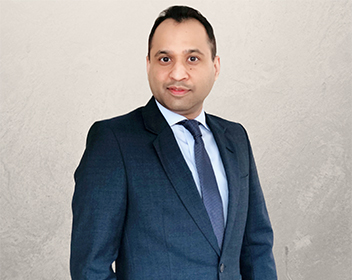
EUR ING Dr Ghazanfar Ali Khan CEng PE(US) IntPE(UK) MInstRE
Published: 25/11/2025
Education and skills:
Doctor of Business Administration (DBA), University of Lancashire
PGDip Petroleum Engineering, Heriot-Watt University
BS (Hons) Electronic Engineering (now ‘Electrical Engineering’), Capital University of Science and Technology, Pakistan
Job Role:
Change Management/Leadership
Employer/Sector:
Defence Sector
What inspired you to become an engineer or pointed you towards an engineering career?
From an early age, I was captivated by the wonders of science. My fascination wasn’t confined to textbooks—it manifested in a hands-on curiosity that often led me to dismantle my toys just to understand how they worked. This innate inquisitiveness became the foundation of my academic journey, driving me to excel in school and later in college, where I consistently ranked among the top of my class. It was this blend of intellectual curiosity and academic achievement that naturally steered me toward engineering—a field that promised both challenge and discovery. Choosing to pursue an undergraduate degree in engineering felt less like a decision and more like a calling, one that aligned perfectly with my passion for problem-solving and innovation.
Throughout my educational and professional journey, I’ve been fortunate to be guided by exceptional teachers and mentors whose insights and encouragement have played a pivotal role in shaping my growth. Their unwavering support has not only helped me navigate complex academic and career milestones but has also instilled in me a deep appreciation for lifelong learning and collaboration.
Today, as I reflect on my path, I see a clear thread: a relentless curiosity, nurtured by inspiring minds, and propelled by a love for science that continues to fuel my ambitions.
Please describe your role or position within your workplace.
I currently serve in a dynamic and strategically critical change management role within a defence organisation. My work revolves around steering complex transformation initiatives that enhance operational efficiency, drive innovation, and ensure seamless adaptation to evolving technological and organisational demands. In this capacity, I collaborate closely with cross-functional teams, senior leadership, and external stakeholders to design and implement change strategies that align with both mission-critical objectives and long-term vision.
Operating within the defence sector adds a unique layer of complexity and responsibility to my role. It requires a deep understanding of regulatory frameworks, security protocols, and the cultural nuances of a highly structured environment. I take pride in contributing to projects that not only improve internal systems and workflows but also support national security and resilience.
Can you describe a typical working day?
Each day presents a unique set of challenges and opportunities. While travel and in-person meetings were once a regular part of my routine, the COVID-19 pandemic and subsequent lockdowns have shifted much of my work into the digital realm.
Thanks to secure and reliable technology, I now conduct most of my meetings online, collaborating with cross-functional teams and stakeholders to drive strategic transformation initiatives. These virtual sessions are essential for aligning change efforts with organisational goals and navigating the complexities of the defence environment.
Beyond meetings, a significant portion of my day is spent managing email communications, coordinating project updates, and refining implementation plans. I engage in detailed documentation and strategic planning to ensure change initiatives are executed smoothly and effectively. Despite the shift to remote work, the pace remains fast and the impact substantial—each day demands adaptability, precision, and a proactive mindset to lead change in a sector where resilience and innovation are paramount.
Are there any particular challenges or unusual aspects to your role?
Absolutely, my role presents a unique blend of challenges and distinctive aspects that set it apart from similar roles in other sectors.
One of the most unusual elements is the highly regulated and security-sensitive environment in which I operate. Every initiative must align with strict compliance protocols and national defence standards, which adds layers of complexity to even routine change processes. Navigating these constraints while still driving innovation requires a careful balance of strategic thinking, discretion, and adaptability.
Additionally, the shift to remote work following COVID-19 has transformed how change is managed. While technology has enabled continuity, leading transformation virtually—especially in a traditionally face-to-face, hierarchical setting demands exceptional communication skills and a heightened sensitivity to stakeholder engagement. Building trust, managing resistance, and fostering collaboration across digital platforms is a daily challenge, but one that has sharpened my ability to lead with clarity and empathy.
These factors make the role both demanding and deeply rewarding, as every successful change initiative contributes not just to organisational efficiency, but to broader national objectives.
What do you find most enjoyable about your job?
What I find most enjoyable about my role is the opportunity to be at the heart of transformation, where strategy meets people. There’s a unique satisfaction in guiding an organisation through complex shifts, especially within the defence sector, where the stakes are high and the impact is far-reaching. Every successful initiative feels like a meaningful contribution not just to internal progress, but to national resilience and innovation.
I also thrive on the variety and dynamism of the work. No two days are the same, and even with the shift to remote collaboration, the challenges remain intellectually stimulating. Whether I’m navigating resistance, crafting communication strategies, or aligning stakeholders around a shared vision, I genuinely enjoy the problem-solving, the human connection, and the sense of purpose that comes with helping teams adapt and grow. It’s a role that constantly pushes me to think critically, lead empathetically, and stay agile in a rapidly evolving environment.
Is there a great professional achievement or high-profile accomplishment that you would like to tell us about?
While I believe my most high-profile accomplishment is still ahead of me, I take great pride in the professional journey I’ve built so far—one that reflects dedication, perseverance, and a deep commitment to continuous growth. My achievements may not yet carry headlines, but they represent meaningful progress and a solid foundation for future impact.
After earning a First-Class Honours degree in Electronic Engineering, awarded with distinction and a medal for outstanding academic performance, I began a path of professional development that has steadily elevated my standing in the engineering community. I achieved Incorporated Engineer (IEng) status in 2009, followed by Chartered Engineer (CEng) registration in 2017. These were complemented by International Professional Engineer recognition (IntPE UK) in 2019, European Engineer (EUR ING) registration through Engineers Europe in 2020, and Professional Engineer (PE) status in the United States in 2025. Each of these milestones reflects a commitment to global standards of engineering excellence and a dedication to continuous professional growth and lifelong learning.
Alongside full-time professional responsibilities, I pursued a postgraduate qualification in Petroleum Engineering and continued to expand my knowledge through advanced courses at world-renowned institutions such as the University of Oxford. Most recently, I completed a Doctor of Business Administration (DBA), with a research focus on change leadership, an area that bridges my technical background with strategic organisational transformation.
These accomplishments may not yet be considered high-profile in the conventional sense, but they mark a purposeful and evolving journey—one that I believe is leading toward even greater contributions in the future.
What contributed to your decision to become professionally registered?
During my undergraduate years at university, I was first introduced to the concept of professional registration by one of my professors, a highly accomplished individual who held both CEng and EUR ING status. His passion for the profession and the way he spoke about the value of these credentials left a lasting impression on me. He not only highlighted the technical prestige associated with professional registration but also emphasised its role in fostering global recognition, ethical practice, and continuous development.
From then on, achieving professional registration became more than just a goal—it became a personal benchmark for excellence. I was inspired to follow in his footsteps and pursue not only CEng and EUR ING status, but also other internationally recognised credentials that would reflect my commitment to engineering at the highest standards. This early exposure laid the foundation for a journey defined by ambition, discipline, and a deep respect for the profession’s global impact.
In what ways has registration benefitted your career?
Chartered status and my portfolio of international professional registrations have significantly enriched my career, offering both credibility and visibility across the engineering landscape. These recognitions have consistently positioned me as a trusted professional in the eyes of clients, peers, and industry stakeholders—enhancing my ability to build strong relationships and secure new projects with confidence.
Over the years, I’ve seen firsthand how professional registration serves as a powerful differentiator. Whether working nationally or internationally, it signals a commitment to excellence, ethical practice, and continuous development. In competitive environments, being professionally registered not only validates one’s expertise but also elevates market value and opens doors to opportunities that might otherwise remain out of reach. For me, these credentials have been more than titles, they’ve been catalysts for growth, trust, and long-term success.
How does your employer benefit from your professional registration?
Working in the defence sector, my professional registrations offer my employer a distinct strategic advantage. These credentials serve as a formal endorsement of my technical competence, ethical standards, and commitment to continuous professional development, all of which are critical in a sector where precision, accountability, and trust are paramount.
My registration enhances the organisation’s credibility when engaging with clients, contractors, and regulatory bodies, especially in high-stakes environments where assurance of expertise is non-negotiable. It signals that the organisation employs professionals who meet globally recognised benchmarks, which can be a decisive factor in securing contracts, building partnerships, and maintaining compliance with international standards.
In short, my professional registration is not just a personal milestone—it’s a value-generating asset that strengthens the organisation’s technical leadership and strategic capability.
Is there any advice you would pass on to someone considering professional registration?
I would strongly encourage anyone considering professional registration to pursue it. Professional registration is far more than a title; it’s a powerful statement of your commitment to excellence, integrity, and continuous development within your field. It reflects not only your technical competence but also your dedication to upholding the highest standards of professional practice.
From my own experience, registration has opened doors to new opportunities, earned the trust of clients and colleagues, and provided a sense of belonging to a global community of professionals. It’s a mark of credibility that sets you apart in a competitive landscape and signals to employers and stakeholders that you take your role seriously. Whether you're early in your career or well-established, the process of achieving registration is a transformative journey—one that challenges you to grow, reflect, and elevate your impact.
If you're passionate about your profession and committed to making a meaningful contribution, professional registration is not just advisable, it’s essential.
Where do you see yourself in your career in five years’ time or what are your future ambitions?
In five years’ time, I envision myself stepping into a more strategic and influential leadership role—one that allows me to shape organisational transformation on a broader scale, particularly within complex, high-stakes environments like the defence sector. Building on my engineering foundation and the insights gained through my DBA, I aim to bridge the gap between technical excellence and business strategy, driving change that is both innovative and sustainable.
My future ambitions include contributing to policy-level decision-making, mentoring emerging professionals, and leading cross-disciplinary teams through large-scale change initiatives. I’m particularly passionate about applying research-driven approaches to leadership, organisational redesign, and performance improvement. Whether through consultancy, executive leadership, or thought leadership, I hope to influence how organisations adapt to evolving challenges while maintaining integrity, resilience, and purpose.
Ultimately, I see myself as a catalyst for meaningful change, someone who not only delivers results but also inspires others to pursue excellence and continuous growth.
Outside work, is there any activity you enjoy doing in your spare time that relates to engineering? For example, do you participate in mentoring, volunteering or membership of other engineering groups?
Outside of my professional role, I remain actively engaged in initiatives that promote engineering and support the development of future professionals. I regularly mentor individuals working toward CEng, IEng, and Engineering Technician (EngTech) registration. Helping others navigate their professional journey is something I find deeply rewarding—it allows me to share insights, offer guidance, and contribute to the growth of the engineering community.
I’ve also served as an accreditation assessor with the Institution of Materials, Minerals and Mining (IOM3), a role that involved visiting universities and industrial organisations both in the UK and internationally. This experience gave me a valuable perspective on global engineering education and practice.
In addition, I’ve contributed to education governance as a school governor and continue to serve as an approved STEM Ambassador. I’m passionate about inspiring young minds and regularly share my professional experiences to promote science, technology, engineering, and mathematics among students. Encouraging the next generation to explore careers in STEM is a cause I care deeply about.