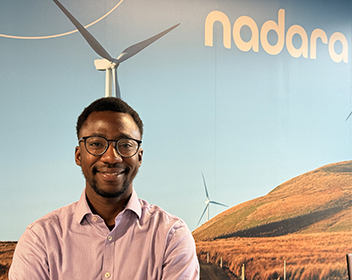
What area or field of engineering do you work in?
Renewable Energy Engineering. My primary focus is onshore wind farm construction projects, where I provide all the execution technical information needed to design, procure, install and commission wind farms. This includes geotechnical site investigation, abnormal load transport and electrical grid connection to the windfarm switching station or substation.
Who has had the biggest influence on your journey as an engineer—and how?
In my first year of engineering, my Bachelor of Engineering professor said, “Energy is life”. His words stayed with me and inspired me to pursue energy engineering as a youth born and bred in the most populous Sub-Saharan city – Lagos, Nigeria, which is still deprived of stable energy access.
What makes engineering more than just a job for you?
Engineers are the ultimate creators! Engineering gives me a gratifying contribution through the dynamic application of design solutions applied in the construction of utility wind farms within European shores.
How does your work contribute to a safer, fairer, or more sustainable world?
I create site civil designs and review the full Engineering Procurement Contract (EPC) package for wind farm construction across Nadara’s EU project pipeline. The applied engineering designs I develop translate into a safe system of work throughout all project phases. These construction projects are scaled to power thousands of homes more sustainably.
What is the biggest career highlight or achievement you’re most proud of?
It has been so gratifying commissioning several sub-mega-watts of industrial rooftop solar photovoltaic systems in England and seeing clients' LinkedIn posts on how their products have been powered by sustainable electricity with significant carbon offset.
Why did you choose to become professionally registered?
Being professionally registered signals my commitment to the rigour of industry critique and trust. I see Chartered Engineer status as having a travel passport in place of other forms of IDs, because it has been standardised via UK-SPEC to match up with global engineering work ethics and maintains continued professional development.
What does professional integrity mean to you in engineering?
This means presenting designs that governing conditions can validate. In my world, I maintain and implement all standards and codes of practice in civil and electrical site designs that form part of the EPC for the sustainable installation and operation of the wind farm or solar plant.
How has professional registration benefitted you or your employer?
It has opened more opportunities for public engagement and to showcase the day in the life of a Renewable Energy Engineer, with support from my employer.
If you could change one perception about engineering, what would it be and why?
That engineering is complex and more reserved for males. It is a stereotype engendered from an early age, and I could tell from being a STEM Ambassador and coming from siblings of first-generation engineers. There needs to be more stories of engineers, just as Dr Somara’s Engineers Making a Difference.
How do you hope to inspire the next generation of engineers?
Since COVID-19, I engage with 500+ students annually by volunteering at schools, university judging events, and I encourage more STEM community engagement from colleagues. I really plan to do more and work with other engineers to inform, educate and inspire future talents.
Do you identify as disabled, or as a member of a minority or under-represented group? Would you like to comment on what impact or influence you feel this has had upon your career?
A gap exists between the near one-third of black & minority ethic groups in UK universities and the fewer than 16% enter the industry. Being a black engineer, I sense this recruitment chronicle and am grateful for organisations like the Association for Black and Minority Ethnic Engineers UK who help to narrow the barriers.